
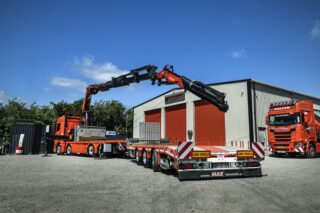
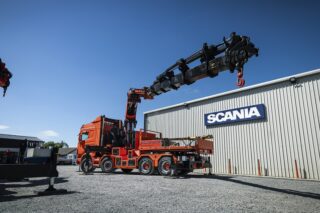
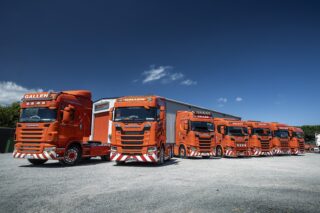
KELVIN GALLEN IS UNAPOLOGETICALLY PASSIONATE ABOUT LIFTING EQUIPMENT AND HIS IMPRESSIVE FLEET OF TRUCK-MOUNTED CRANES IS ENOUGH TO RAISE ANYONE'S SPIRITS – AS WELL AS SOME VERY CHALLENGING LOADS. HEAVYTORQUE PAYS HIM A VISIT.
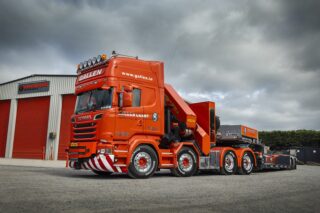
Over 25 years ago, Kelvin Gallen decided to quit his job driving a truck with a crane for a Dublin‑based operator and, alongside his wife and business partner Fiona, set up on his own. He had been with his previous employer for a while and had become fascinated with truck‑mounted cranes and just what could be done with them. Like many, however, he felt that he could do better working for himself. He had already built up quite a bit of experience and made several useful contacts, so he bought his first crane truck, a used Scania P93 M230 with a Cormach 16.5 tonne/metre crane.
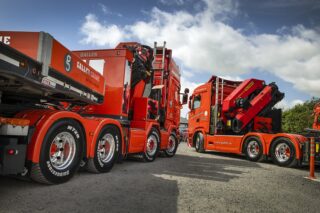
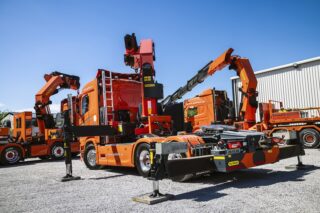
These days, Kelvin runs one of the most impressive lifting, transport and installation operations anywhere, with a fleet of trucks, cranes and other specialist equipment to equal any other. Gallens is, at its heart, very much a family affair. Kelvin and his wife Fiona work with their daughter Emily, sons Shane, Bradley and Sam, his father Kevin, his father‑in‑law Fergus, and a dedicated team of skilled staff, all of whom share the same enthusiasm and passion for cranes and other high specification equipment.
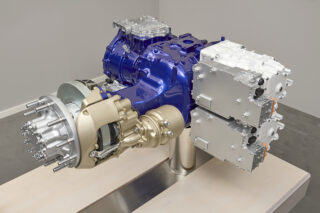
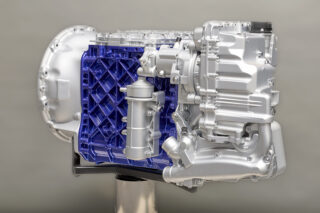
BOTH INTERNAL COMBUSTION AND ELECTRIC POWER ARE MOVING FORWARD FAST AT VOLVO, AS A RECENT EVENT IN GOTHENBURG DEMONSTRATED.
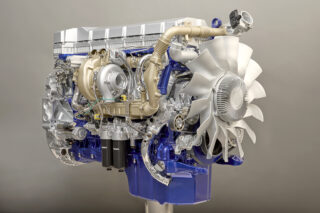
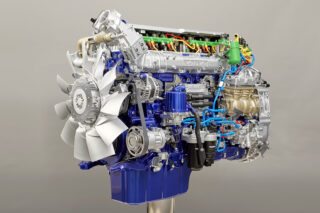
Volvo Trucks recently launched two all-new 13-litre engines, one diesel and the other gas-powered, and has promised to introduce a hydrogen-powered version of this design before 2030. At a launch event in Gothenburg, it also showcased its latest battery-electric vehicles (BEVs), offering greatly extended ranges and higher gross vehicle weights than previous BEVs. The truck maker also said that hydrogen fuel cell versions were undergoing testing and would be launched in 2030.
The new D13 engine replaces the current 13-litre Volvo unit fitted to the FH, FM and FMX models and the 11-litre engine in the FM and FMX ranges. While Volvo is investing heavily in battery-electric and hydrogen fuel cell drivelines, the introduction of the new diesel and gas-powered range shows that it believes internal combustion engines will remain at large for decades to come. The outgoing D13, in single turbocharger and turbo-compound form, has earned a reputation for good fuel consumption, particularly when combined with the wind-cheating FH Aero cab range.
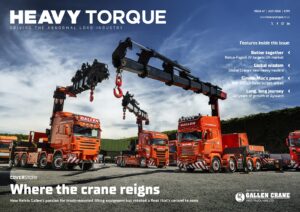
With 132 pages of first-class specialist transport content, what more could you wish for? Click the appropriate link below to purchase your annual subscription, or an individual copy.
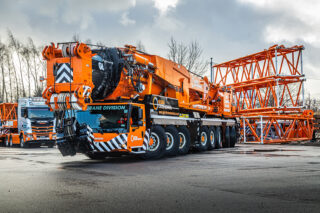
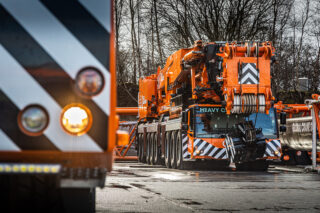
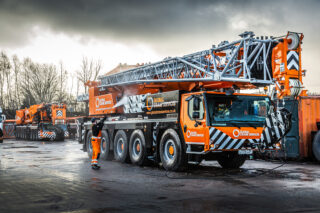
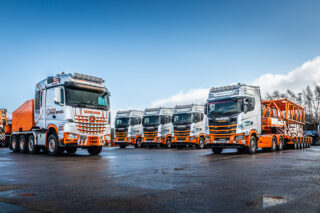
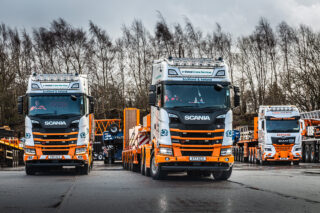
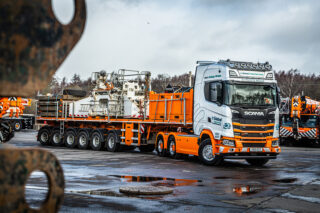
HEAVY CRANE SPECIALIST GLOBAL CRANE SERVICES HAS INVESTED IN FOUR NEW SCANIA XT 770S 8x4s TO HELP POSITION ITS HEAVIEST MOBILE CRANES WHEREVER THEY ARE NEEDED BY THE RENEWABLE ENERGY SECTOR AND OTHER CUSTOMERS.
The north-east of Scotland has been heavily associated with energy and power generation since oil and gas were first extracted in large volumes from the North Sea in the 1970s, creating healthy demand across subsequent decades for specialist heavy transport and lifting services. And that, in turn, encouraged considerable development in transport and crane technology – not least in heavy mobile cranes and hydraulic modular trailers.
While the oil and gas sector has been in decline in recent years, rapid developments in wind and solar energy have led to continued demand for heavy lifting and transport in the area. This has created fresh challenges for specialist crane and haulage companies and given rise to the development of new techniques for lifting and moving wind turbine blades, hubs, nacelles and other components, especially given the steep hills, country lanes and even mountainsides that need to be negotiated to reach some rural wind farm sites.
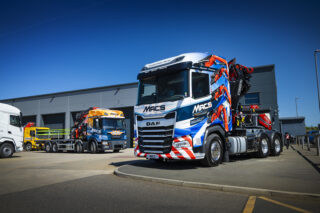
MAC’S TRUCK SALES HAS BEEN POWERING AHEAD OVER THE PAST DECADE, ACHIEVING AN IMPRESSIVE EIGHTFOLD RISE IN TURNOVER AND EXPANDING ITS SERVICES BEYOND SIMPLE TRUCK SALES TO VEHICLE RENTAL, BODYBUILDING AND CRANE EQUIPMENT.
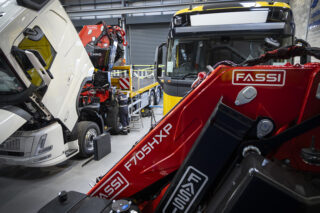
For operators in the construction sector, using cranes is part of everyday life. Many look to use cranes, especially the larger ones, across a 360-degree field and to do this typically requires legs that go over the front of a cab. But a perennial problem is that usual solutions are not aerodynamic and add increased length to the vehicle.
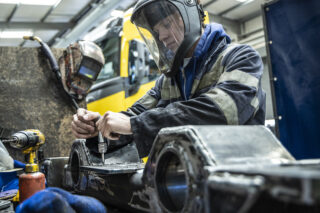
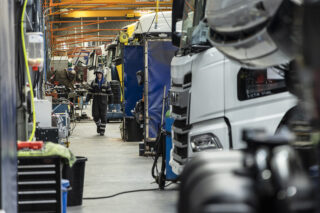
The team at Mac’s Truck Sales has regularly encountered this problem and decided to do something about it. And after 18 months of engineering, testing and production by Mac’s Truck Sales’ in-house design team, a system has been produced for the DAF XG, XF and XD and Volvo FH Aero that solves the problem.
With 132 pages of first-class specialist transport content, what more could you wish for? Click the appropriate link below to purchase your annual subscription, or an individual copy.
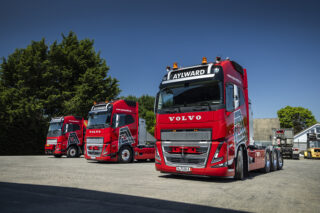
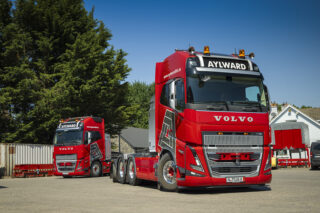
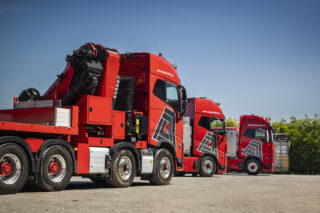
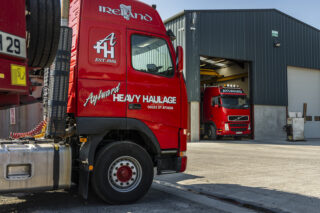
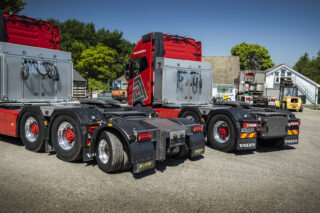
GAINING THE RIGHT KNOWLEDGE AND REPUTATION TO BECOME ONE OF THE MOST SUCCESSFUL OPERATORS IN THE HEAVY HAULAGE SECTOR TAKES TIME, AS A RECENT VISIT TO IRISH FIRM AYLWARD HEAVY HAULAGE APTLY UNDERLINED TO HEAVYTORQUE.
Making a move into the heavy end of the specialist transport market is a major step, given the huge investment and operational complexities involved. And anyone trying to do so will need a good record of working at lighter weights to be taken seriously, along with an ability to add lifting and installation to the services they offer. Typically, it’s something that can only be achieved over a long period and in small steps. And that has certainly been the case at Ireland-based Aylward Heavy Haulage, where the process began in 1981 when founder PJ Aylward started as an owner-driver working in Ireland, the UK and mainland Europe with the support of his wife Marian, out of a base near Durrow in County Laois on the N77, roughly halfway between Dublin and Cork.
In the early 1990s, they invested in a stepframe trailer to move forestry equipment and machinery for a local branch of the state forestry body, gaining a reputation for reliability and for dealing with any problems that arose in those remote forest locations.
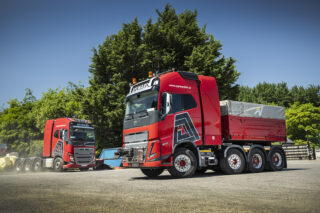
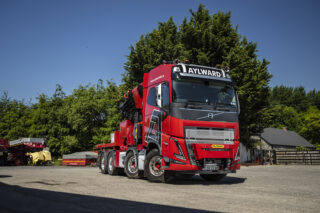
ITALIAN HEAVY TRANSPORT AND ENGINEERING SPECIALIST FAGIOLI IS DESTINED TO BECOME MUCH MORE WIDELY KNOWN IN THE UK AFTER ITS RECENT TIE-UP WITH NOTUS CONTRACT LIFTING.
Many in the UK will be unaware of the operational scope and capability of Italian-based Fagioli Group, despite it providing a wide range of heavy lift, specialist transport and associated services, operating throughout the world, and carrying out some of the most challenging projects possible.
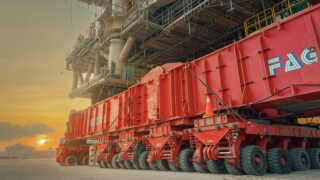
Its services include almost every aspect of heavy transport, lifting, jacking, skidding, specialist installation and engineering, both on land and water. And two simple statistics hint at the scale of the Fagioli operation: the total number of self-propelled modular transporter (SPMT) axle lines in its fleet is over 2,000; and the upper weight limit for its jacking and skidding systems is currently 64,000 tonnes.
Fagioli started out as a family transport business in 1955, when founder Giovanni Fagioli began with just one truck in routine road transport, growing and gradually diversifying into heavier work.

With 132 pages of first-class specialist transport content, what more could you wish for? Click the appropriate link below to purchase your annual subscription, or an individual copy.
